7 Conversation Intelligence Platforms for Customer Interactions at Scale
Seven conversation intelligence platforms judged on what they capture rather than how well they transcribe, because at volume the channel coverage decides what you miss. Choose by the team that will act on the signal: sales coaching, post-sales retention and product feedback need different tools. Only two of the seven publish per-seat pricing, and analytics often sits behind a tier gate.
This article is for informational purposes only and does not constitute financial, tax, or legal advice. Consult a qualified professional for guidance specific to your situation.
Reviewed for financial accuracy by the Startup Finance Guide editorial team. Our editors cross-reference all claims against platform documentation, pricing pages, and primary regulatory sources. Last reviewed: November 2, 2026.
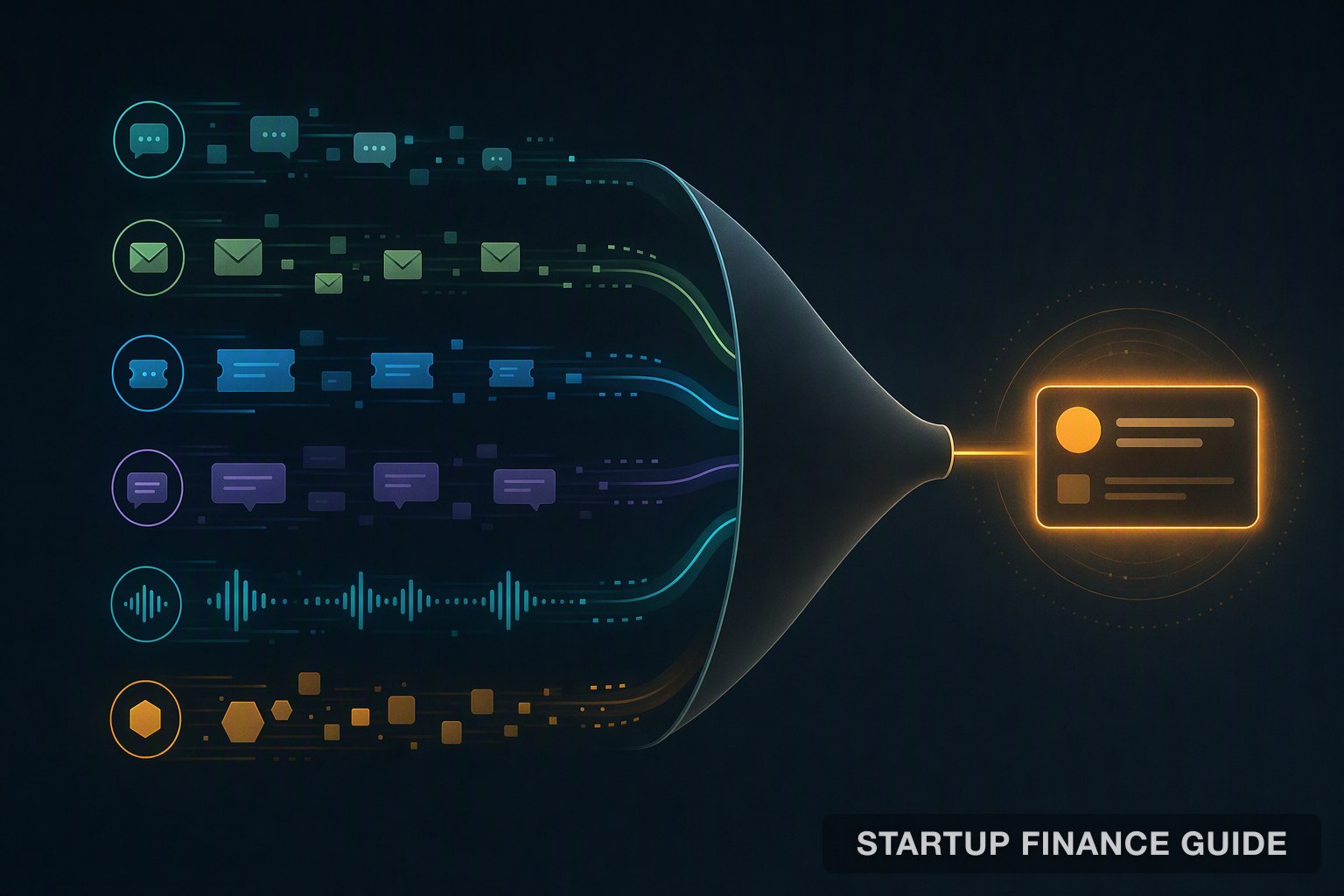
At scale, the question stops being which platform analyses calls best and becomes which channels it can analyse at all. Gong, Chorus and the merged Clari and Salesloft platform are built around sales calls and are strongest where call volume is the bottleneck. Quivly reads calls alongside email, Slack and product usage for post-sales teams. Enterpret ingests support tickets, reviews, surveys and social alongside calls, for product and customer experience teams. Avoma and Fireflies.ai cover meetings at the lower end, though only one of them publishes its prices.
Volume is what exposes the difference. A manager can listen to a sliver of a week's calls, so the platform decides which moments reach a person. A platform that only hears calls will miss the complaint that arrived as a support ticket.
Key takeaways
- Choose by the team that will act on the signal. Sales coaching, post-sales retention and product feedback need genuinely different tools, and buying the wrong category is the expensive mistake here.
- Check what gets captured, in writing. Phone calls, video meetings, email, chat and tickets are five different integrations, and vendor pages describe them loosely.
- Pricing transparency is poor across this category. Of the seven here, two publish per-seat prices and the rest quote.
- For the general buyer's roundup of call-recording platforms, our conversation intelligence comparison covers the recording layer in more depth. This guide is about which tool copes when the volume and the channels multiply.
The seven at a glance
| Platform | Best for | What it captures | Pricing |
|---|---|---|---|
| Quivly | Post-sales and customer success | Calls, email, Slack, product usage, support, billing | Quoted |
| Gong | Enterprise sales coaching and deal risk | Calls, meetings, emails | Quoted |
| Chorus by ZoomInfo | Teams already on ZoomInfo | Calls, meetings, emails | Quoted |
| Clari and Salesloft | Revenue ops wanting calls and forecasting together | Sales calls and deal activity | Quoted |
| Enterpret | Product and CX feedback at volume | Tickets, reviews, surveys, calls, social, app stores | Quoted |
| Avoma | Mid-market teams | Meetings | From $19 per recorder seat a month, billed annually |
| Fireflies.ai | Lean teams | Virtual meetings | Free, Pro, Business and Enterprise tiers, prices not published |
What these platforms do
- Transcribe and summarise, turning every call into searchable text with action items.
- Detect key moments: competitor mentions, pricing objections, decision makers.
- Score and coach against a scorecard rather than a manager's recollection.
- Flag risk early, which feeds customer health scoring on accounts already signed.
- Sync to the CRM so notes land without typing.
The jobs are similar. The channels, and the team each tool is designed for, are not.
The sales-call platforms
Gong
A revenue AI platform capturing calls, meetings and emails and turning them into deal health and next steps. Deal alerts flag conversations that have gone quiet or objections left unaddressed, coaching works from real conversations across the team, and competitor mentions surface automatically.
At scale: this is the category's default for a reason, and the point where it stops suiting you is usually budget rather than capability. Gong does not publish pricing, and the third-party estimates circulating online are estimates rather than quotes.
Best for: enterprise sales organisations with high call volume and a RevOps team to own the system.
Chorus by ZoomInfo
Sits inside ZoomInfo's go-to-market platform, recording and analysing calls, meetings and emails, with ZoomInfo contact and company data attached to each account. Deal momentum and churn risk track in one view, and contacts and communications sync to the CRM.
At scale: the advantage compounds if you already license ZoomInfo and dissolves if you do not.
Clari and Salesloft
The two merged in December 2025, so Clari Copilot and Salesloft's conversation intelligence now sit under one roof alongside Clari Forecast. Manager scorecards arrive pre-filled from transcripts, key moments and tracker trends surface recurring themes across many conversations, and call evidence sits beside the forecast, so a commit call can be checked against what the buyer actually said.
At scale: pairing evidence with forecasting is the genuine differentiator. The caveat is integration risk during a post-merger roadmap, so ask what is supported over your next two renewal cycles.
The multi-channel platforms
Quivly
Built for post-sales rather than for the sales call. It reads what customers say in calls, email and Slack alongside product usage, support and billing data, follows each account from onboarding through renewal, and drafts the next step for a person to approve. Renewal briefs link claims back to their source, and kickoff transcripts, emails and Slack messages become a single onboarding project with tasks assigned.
At scale: the argument is channel coverage rather than transcription quality. A customer success manager carrying more than fifteen accounts cannot read every thread, and most of the warning signs after the sale do not arrive on a call.
Where it stops: it does not record calls, so it needs a capture tool upstream.
Enterpret
Unifies customer feedback from support platforms such as Zendesk and Intercom, call recording tools such as Gong, app stores, review sites, social and community channels and product analytics, into one analytics layer. Its Adaptive Taxonomy classifies feedback using your customers' own language and updates itself as new themes appear, and its Customer Context Graph links each conversation back to its theme, account, associated revenue and related release.
At scale: this is the only tool here designed for the case where feedback volume, not call volume, is the problem. Tying a complaint to an account and to revenue is what turns feedback into a prioritisation input.
Note on the numbers: Enterpret's site cites 30+ connectors for its agent and 15+ sources in one customer story rather than a single headline figure, so confirm coverage for your specific stack.
The meeting assistants
Avoma
Schedules, records, transcribes and summarises meetings, with conversation and revenue intelligence available as additional layers. Pricing is per recorder seat, starting at $19 a month billed annually or $29 monthly, with viewers free on every plan. Its own pricing page is inconsistent on the middle tier, so confirm at checkout.
At scale: free viewer seats matter more than they sound when the people who need to read a transcript outnumber the people recording.
Fireflies.ai
Joins virtual calls, transcribes and writes summaries and action items, with Free, Pro, Business and Enterprise tiers. Its FAQ places analytics at the Business tier and says paid plans carry more transcription credits than the free one.
At scale, with a caveat: the pricing page does not publish per-seat figures, and limits on the free tier are not stated, so budget from a quote rather than from the figures that circulate in comparison articles.
How to choose
- Name the team that will act on the signal. Sales coaching points to Gong, Chorus or Clari and Salesloft. Post-sales points to Quivly. Product feedback points to Enterpret. Buying across that line is how platforms end up unused.
- Confirm what gets captured, in writing. Phone calls, video meetings, email, chat, tickets. Ask for the list rather than accepting "omnichannel".
- Match the stack before the demo. CRM, dialer and data integrations, especially if you already pay for ZoomInfo or Salesforce.
- Price the full bill. Platform fees, add-on layers and tier gates. A plan that looks cheap can lose its analytics below a certain tier, which is exactly where the value sits.
- Set the success measure first. Fewer surprise churns, shorter ramp time, something countable. Our framework for measuring AI agent ROI covers how to attribute it honestly, and our guide to choosing an AI customer success platform goes deeper for post-sales buyers.
Limitations
Capabilities and pricing come from each vendor's own site and documentation as checked in November 2026. Five of the seven publish no prices, and we have not reproduced third-party price estimates because they are estimates. We have not tested transcription accuracy, speaker separation or retrieval quality on any platform at volume, which is where differences between these products actually appear. Where a vendor's own pages gave inconsistent figures, we say so rather than pick one.
Frequently asked questions
Does analysing more channels mean better signal?
Only if someone acts on them. More channels produce more alerts, and a team already ignoring call alerts will ignore ticket alerts too. Fix the routing before expanding the inputs.
Can one platform serve sales and customer success?
Partly. The capture layer can be shared; the analysis each team needs is different. Most organisations above a certain size end up with a recorder plus a post-sales layer reading from it.
What is the real cost at volume?
Usually seats rather than minutes, which means the bill scales with team size rather than with call volume. Check whether analytics sits behind a tier gate, because that is where a cheap plan becomes expensive.
How long before it is useful?
Transcripts are immediate. Pattern analysis needs enough conversations to establish a baseline, usually a few weeks of normal volume. Treat promises of insight in week one with suspicion.
What about consent and retention?
Recording rules vary by jurisdiction and several require all-party consent. Settle the policy and the retention period before rollout, because retention is usually what limits how far back you can search later.
Conclusion
Before booking a demo, write down the three signals your team most needs to catch: a competitor mention, a pricing objection, a cancellation question. Next to each, name the person who should act within 24 hours.
Then ask every vendor to show that exact signal travelling from a recording to that exact person. The platform that makes that handoff easy is the right one, whatever the feature list says, and at volume it is the only thing that separates them.
Capabilities and pricing come from each vendor's own site and documentation as checked in November 2026. Five of the seven publish no prices, and third-party price estimates are not reproduced here because they are estimates.
How we built this comparison: capture breadth and pricing come from each vendor's own pages, and where a vendor's pages gave inconsistent or absent figures we say so rather than choose one.
Last verified: 2026-11-02