How Do You Measure ROI From AI Agents in Post-Sales?
Measuring AI agent ROI in post-sales requires tracking efficiency gains, revenue impact, and signal quality against a pre-deployment baseline. Credit the agent for 30 to 50% of saves using incremental attribution, not the full outcome, and report monthly to CS leadership and quarterly to finance. Teams that build this discipline early can defend the agent's value with numbers, not impressions.
You deployed an AI agent to catch churn earlier and free up your CSMs' time. Six months in, leadership wants to know what it actually delivered, and "it feels like it's helping" isn't going to hold up in a budget review.
The problem is that AI agent ROI doesn't behave like typical software ROI. Agents work autonomously in the background, flagging risks and drafting actions between human touchpoints, so it's genuinely hard to know how much of a save came from the agent versus the CSM who reviewed and sent the email. Without a clear framework, you end up either overstating the agent's impact or undervaluing it, and either one makes your next budget conversation harder.
A practical four-step framework for doing it: what to capture before the agent goes live, how to track impact across three dimensions, how to split credit between the agent and your CSMs, and how to report it to stakeholders in a way that actually holds up.
Key takeaways
- Measure AI agent ROI across three dimensions: efficiency gains, revenue impact, and signal quality.
- Capture baseline metrics before deployment. Without a baseline, you can't isolate the agent's impact from normal business fluctuations.
- Teams typically reclaim 30 to 40% of CSM time from administrative work after deploying AI agents.
- Keep false positive rates on churn alerts under 10% to maintain trust in the agent's signals.
- Use incremental attribution (crediting the agent for the signal and draft, not the entire outcome) rather than holistic attribution, since it's more defensible to finance teams.
What does "ROI" mean for AI agents in post-sales?
ROI for AI agents in post-sales measures three things together: how much manual work the agent eliminates (efficiency), how much it moves retention and expansion revenue (revenue impact), and how reliable its signals actually are (signal quality).
This is different from how you'd typically measure software ROI. Traditional tools get evaluated on time saved per user or cost per seat. AI agents complicate that because they act continuously in the background, generating signals and drafting responses that a human still reviews before anything goes out.
The agent's contribution is also indirect. It surfaces the churn risk or expansion opportunity, but your CSM decides whether to act on it. That's what makes attribution the central challenge in measuring agent ROI, not an afterthought.
Signal quality matters just as much as activity volume. An agent that flags 100 churn risks a month is worthless if 95 of them are false alarms. Your team stops trusting the alerts, and the agent becomes background noise instead of a resource.
Step 1: Set your baseline before you deploy
Valid ROI measurement starts before the agent goes live. Without a baseline, you have no way to separate what the agent changed from normal month-to-month variation in your business. Capture these three things pre-deployment:
- Time allocation: Survey your CS reps on how many hours a week they spend on manual health scoring, QBR prep, ticket triage, and expansion research. This becomes your efficiency baseline.
- Revenue metrics: Pull your current NRR, gross retention rate, expansion play conversion rate, and average time-to-close on expansion deals from your CRM. These let you attribute post-deployment improvement to the agent rather than market conditions or sales team changes.
- Signal accuracy: If you're already running manual or rule-based churn scoring, measure its current false positive rate. Look back at last quarter's flagged accounts and check what percentage actually churned versus renewed. This tells you whether the agent improves or worsens your signal quality once it's live.
Give yourself at least one full quarter of baseline data before deployment. Anything shorter makes it hard to separate agent impact from seasonal noise or one-off account events.
Step 2: Track ROI across three dimensions
Once your agent is live, track impact across three lenses at the same time, not in sequence.
Efficiency gains
This is the most straightforward dimension to measure: how much manual work did the agent eliminate? Track time saved per rep and case deflection rate, the percentage of issues resolved without a human needing to step in.
Teams typically reclaim 30 to 40% of CSM time from administrative work after deploying AI agents. To put that in dollar terms: if a 10-person CS team saves an average of 6 hours per rep per week at a fully loaded hourly cost of $50, that's $3,000 a week, or roughly $156,000 a year, in reclaimed capacity. The actual numbers will vary by team size and cost structure, but the calculation itself, hours saved × hourly cost × rep count, is what you're after.
Revenue impact
This dimension tracks whether the agent is actually moving the numbers your CFO cares about: NRR lift, expansion velocity, and churn prevented. The key is tying each metric to a specific agent action instead of reporting a vague aggregate improvement. A rescue playbook that fired before a silent churn event. An expansion opportunity the agent surfaced from usage data your team never manually reviewed. A QBR that went out with zero prep hours from the CSM.
For example, a company with $10M ARR that lifts NRR from 90% to 93% through earlier agent-driven intervention retains an additional $300K annually. If expansion conversion also rises from 10% to 15% across 100 opportunities at a $25K average deal size, that adds another $125K. The formula: (NRR lift % × ARR) + (expansion conversion lift × average deal size × number of opportunities). Actual results vary by customer mix and market conditions, but this is the shape of the calculation.
Signal quality
This dimension measures whether you can trust what the agent is telling you. Track false positive rate (the percentage of flagged churn risks that turn out to be non-issues) and action-to-outcome latency (the time between an agent-triggered action and a measurable result, like a customer re-engaging).
Keep your false positive rate under 10% on churn alerts. Above that, reps stop reviewing the alerts altogether, and the agent stops being useful regardless of how much volume it's processing. If you're reducing false positives from 20% down to under 10% across 200 monthly alerts, you're saving your reps from investigating roughly 20 non-issues a month. At 30 minutes per investigation and $50/hour, that's about $500 a month, or $6,000 a year, in reclaimed time. A smaller number than efficiency or revenue gains on its own, but it compounds with the other two dimensions.
This is also where citation transparency earns its keep. Platforms like Quivly AI flag low-confidence signals explicitly and tie every alert back to the underlying data, so your team can see why a risk was flagged instead of taking the score on faith. That makes it easier to audit false positives and figure out whether the issue is the signal itself or how it's being weighted.
Step 3: Attribute outcomes fairly between the agent and your CSMs
Here's the question that trips up most ROI reporting: when an agent flags a churn risk and a CSM reviews, edits, and sends the outreach that saves the account, who gets credit for that save?
Two options:
- Holistic attribution credits the entire outcome to the agent-plus-human system. It's simpler to report but risks overstating the agent's actual contribution, especially to a finance team that's going to ask hard questions about it.
- Incremental attribution credits the agent specifically for what it contributed: the early signal and the drafted outreach, not the full contract value of the save. Your CSM's judgment and relationship still count for their share.
Incremental attribution is the more conservative and more defensible approach. A reasonable starting point is crediting the agent for 30 to 50% of a save, depending on how much the CSM edited the agent's draft before sending it. If they sent it essentially as-is, credit the agent more. If they rewrote most of it, credit them less.
Tagging how much a CSM edits agent-drafted content also gives you useful data over time. A high discard rate on agent drafts signals the agent isn't delivering relevant output. A high send-as-is rate confirms it is, and both are worth tracking regardless of which attribution model you land on.
Step 4: Report ROI to stakeholders on a set cadence
Different audiences need different levels of detail, and reporting on a consistent cadence keeps the conversation from becoming a one-off defense every time someone asks whether it's working.
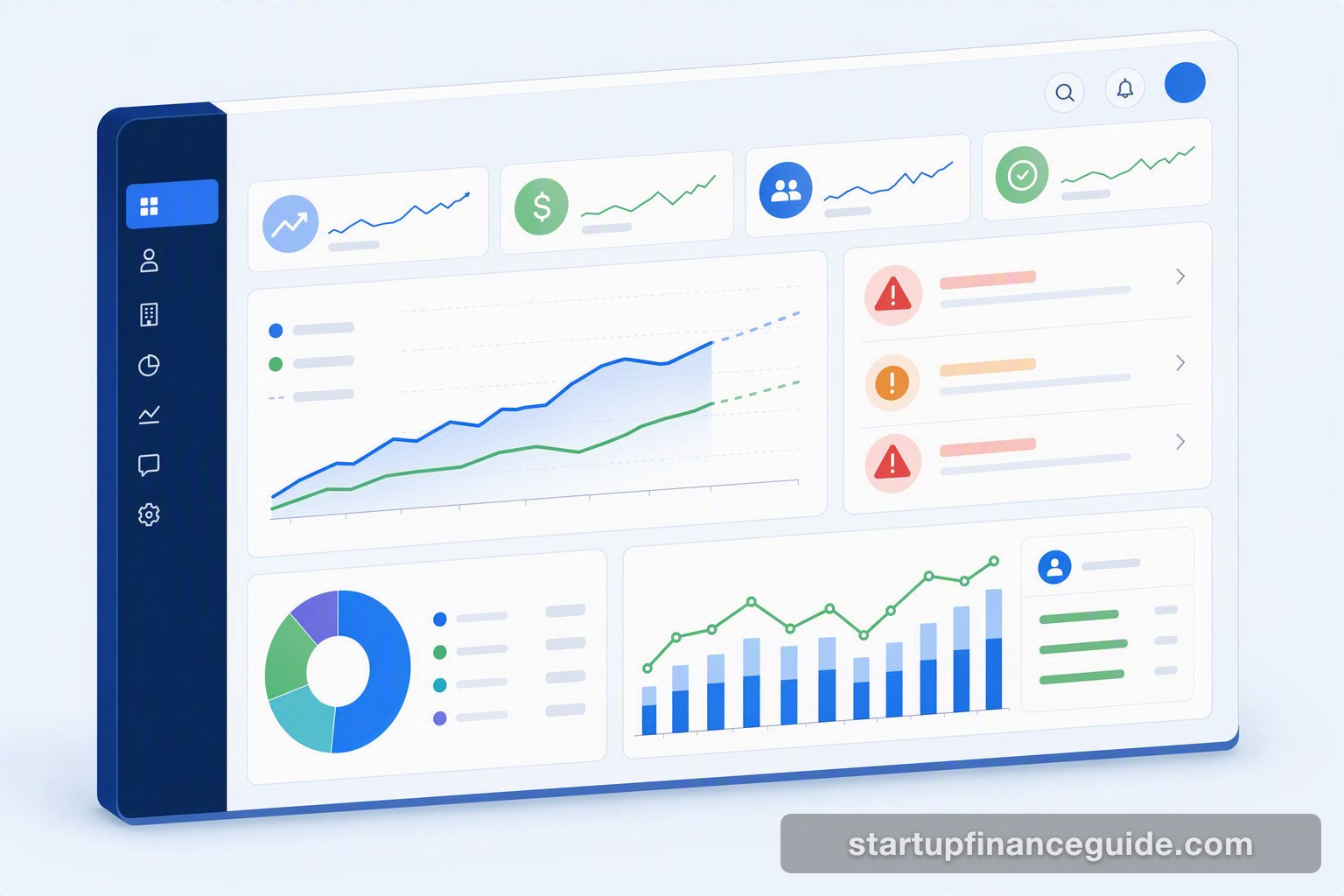
Monthly, to CS leadership: a dashboard showing efficiency hours saved, revenue retained or expanded, and your false positive rate trend. This is where you catch underperformance early and adjust before it becomes a bigger conversation.
Quarterly, to finance and RevOps: a summary focused purely on financial impact, dollars saved through efficiency, revenue protected through churn reduction, and revenue added through expansion, measured against your total deployment and maintenance costs.
Platforms like Quivly AI let you build this reporting layer directly, tracking playbook performance (open rates, response rates, saves per play) alongside the underlying account data, so you're pulling from one system instead of stitching together exports from your CRM, support desk, and billing tool every reporting cycle.
Use what you're seeing in this reporting to actually adjust the agent, not just to justify its existence. If the false positive rate stays high, tighten the risk scoring threshold. If expansion signal conversion is low, revisit the criteria the agent uses to surface those opportunities. ROI measurement works best as an ongoing feedback loop, not a one-time audit.
Common ROI measurement pitfalls to avoid
A few mistakes show up repeatedly in how teams measure (or fail to measure) agent ROI.
Skipping the baseline period is the most common one. Teams deploy an agent and immediately start claiming ROI without ever capturing pre-deployment numbers. Without that baseline, you can't separate what the agent changed from normal business fluctuation.
Ignoring human review time is a related trap. Agents draft actions, but a person still reviews them. If that review time is significant, your efficiency ROI shrinks accordingly. If review time exceeds roughly 20% of the time you're claiming to have saved, it's worth revisiting draft quality or alert volume.
Over-attributing revenue wins to the agent is exactly what incremental attribution in Step 3 is designed to prevent. When an agent flags a risk and a CSM saves the account, crediting the entire contract value to the agent overstates its actual impact.
Neglecting the cost of false positives is easy to do when you're tracking only the churn risks the agent got right. Both outcomes need to factor into your efficiency ROI, since chasing false alarms is time your reps aren't spending elsewhere.
Final thoughts
Measuring AI agent ROI in post-sales comes down to tracking three things consistently: how much manual work the agent removes, how much retention and expansion revenue it influences, and how reliable its signals are. None of that is possible without a baseline captured before deployment, and none of it holds up to scrutiny without a fair, incremental approach to attribution between the agent and your CSMs.
Teams that build this measurement discipline early, log agent activity, connect it to outcomes, and report on a consistent cadence are the ones who can prove the agent's value with real numbers instead of a general sense that things feel better since it launched.
That discipline is easier to maintain when the underlying platform is built for it. AI-native tools like Quivly AI, which surface cited, auditable signals rather than black-box scores, give you a head start on the attribution and signal-quality tracking this kind of measurement depends on.
Frequently asked questions
What baseline metrics should I capture before deploying an AI agent?
Capture time allocation (hours per rep on manual health scoring, QBR prep, and ticket triage), revenue metrics (NRR, gross retention, expansion conversion rate), and signal accuracy (your current false positive rate if you're using manual or rule-based churn scoring). Ideally, gather at least one full quarter of this data before the agent goes live.
What false positive rate is acceptable for AI agent churn alerts?
Keep it under 10%. Above that threshold, reps tend to stop trusting and reviewing the agent's alerts, which undermines the entire point of deploying it.
How quickly should I recalibrate if the false positive rate rises?
Treat a rising false positive rate as an active signal to act on, not something to wait out. If it climbs well above your 10% target, revisit and tighten the agent's risk scoring thresholds rather than letting trust in the system erode further.
This article is for general informational purposes only. ROI calculations are illustrative; actual results vary by team size, customer mix, and market conditions. Consult qualified advisors before making technology investment decisions.
Reviewed for accuracy by the StartupFinanceGuide.com editorial team. Metrics and attribution frameworks were cross-referenced against publicly available industry benchmarks as of August 2026.
Last verified: 2026-08-03