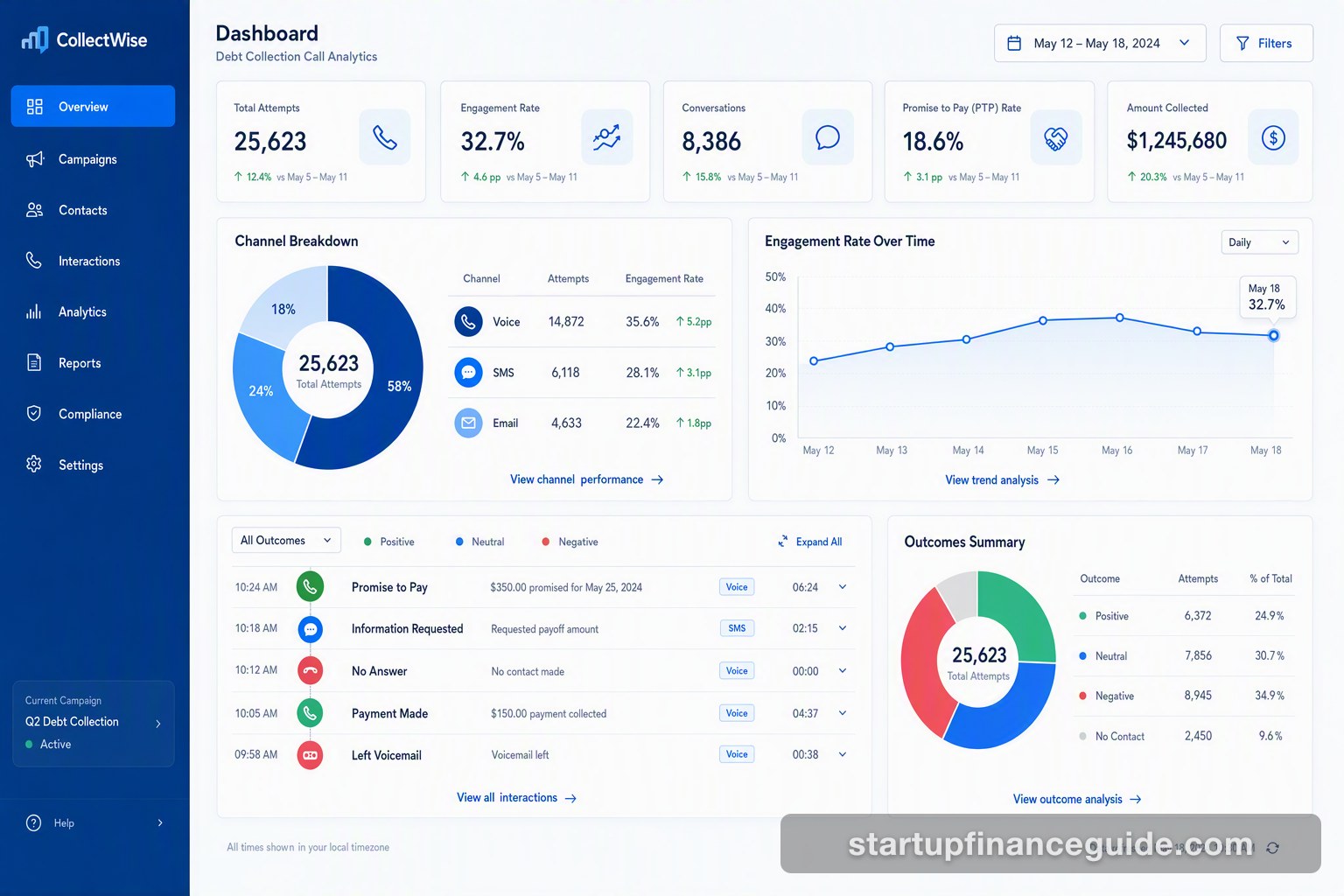
Why Are Your Debt Collection Calls Getting Such Low Engagement?
Low engagement on debt collection calls traces to flagged numbers, predictable timing, wrong channel, or a trust breakdown from a bad first interaction. Traditional predictive dialers compound each of these by calling from the same numbers on the same schedule without adapting to past behavior. AI-assisted orchestration solves the logistics problem but introduces a trust gap: Yale researchers found debtors first contacted by AI repaid about 1% less of their initial late payment a year out than those contacted by humans. The practical answer is hybrid: let AI handle early-stage, low-complexity contact, and bring humans in where persuasion and commitment matter.
You're placing the calls. Debtors aren't picking up, staying on the line, or responding to your texts. It's tempting to conclude that people just don't want to deal with their debts, but that's rarely the real story. Most of the time, low engagement traces back to a handful of fixable problems: the wrong number reputation, the wrong timing, the wrong channel, or a first impression that trained the debtor to avoid you.
This isn't about calling harder or calling more often. It's about calling smarter, and for some readers, about being honest with yourself about who or what is actually doing the calling.
How traditional and AI-assisted debt collection compare
| Factor | Traditional / Manual | AI-Assisted (Done Well) |
|---|---|---|
| Call timing | Fixed schedule, same time for every account | Adjusts based on when a debtor has actually engaged before |
| Channel | Usually voice-only | Switches between voice, SMS, and email based on past response |
| Script | Static, same for every call | Adapts within compliance boundaries based on the conversation |
| Consistency | Depends on individual agent | Consistent tone and disclosure delivery on every contact |
| Persuasion and dispute handling | Human-led throughout | Escalates to a human at the right moment, rather than attempting to close everything |
The strongest results come from combining both, not from full automation and not from a return to purely manual outreach.
The most common reasons debt collection calls go unanswered
Before changing strategy, it helps to know what is actually breaking down.
The most common culprit is a flagged number. Carriers score phone numbers based on call volume and complaint patterns, and a number that gets flagged gets silently deprioritized or blocked before the debtor ever sees it ring. A close second is predictability: debtors learn patterns, and a call that arrives at the same time from the same number every day becomes an easy call to ignore.
Script quality matters more than people expect. Generic, robotic-sounding scripts blend into the noise debtors have already learned to tune out. So does channel mismatch: some debtors will never pick up a call but will respond to a text within minutes. If you are only calling, you are missing them entirely.
Timing is worth examining separately from compliance. Calling within the legally permitted window is not the same as calling when the debtor is actually available. Legal and practical are different constraints.
The last one compounds everything else: an early bad experience teaches debtors to avoid you. An aggressive tone, a confusing explanation, or no clear next step on a first call can shape how the debtor responds to every contact that follows it.
Why traditional dialers make the problem worse
Legacy predictive dialers tend to amplify these problems rather than solve them.
They call from the same set of numbers on the same schedule, regardless of whether a debtor has ever picked up before. Someone who has ignored five calls in a row keeps getting the same call at the same time, even when the data already shows that approach is not working. That consistency is also exactly the pattern carriers use to flag a number as spam: high volume, fixed origin, predictable cadence.
The deeper issue is that a traditional dialer treats every debtor identically. There is no feedback loop from past behavior. The obvious fix is to replace that rigidity with something adaptive, an AI system that adjusts timing, channel, and tone in real time. That solves the logistics problem. But it can introduce a different one.
When the channel itself is the problem
Sometimes the problem is not timing or targeting. It is that the debtor knows they are talking to a machine, and that changes how seriously they take the conversation.
Researchers at Yale tested this. They randomly assigned debtors to be contacted by AI callers or human agents, then tracked outcomes over the following year. AI callers were noticeably less effective at getting debtors to make and keep repayment commitments, even after a human took over the case later. Borrowers first contacted by AI repaid about 1% less of their initial late payment a year out, and missed more payments going forward, than those who dealt only with humans.
The explanation is not complicated: a promise feels less binding when you know you made it to a machine.
That does not mean AI is the wrong choice. It means being deliberate about where it goes. For early-stage, low-complexity work like reminders, right-party contact, and simple payment links, AI handles consistency and patience better than most humans can sustain at scale. For anything that requires actual persuasion, or for repairing a broken promise, a human closes better. The trust gap is real and measurable, and it shows up most clearly in promise-to-pay follow-through over time.
If you have already fixed the logistics problems and engagement is still low, this is where to look next: not whether you are using AI, but where in the process it is doing the talking.
How to improve engagement without violating FDCPA
Start with number reputation. Branded caller ID lets debtors see who is calling before they answer, which improves answer rates on its own. Rotate numbers proactively rather than waiting for a spam flag to appear. By the time you know a number is flagged, the damage is already compounding.
Time contact based on actual debtor behavior, not a default schedule. If someone has answered at 6 p.m. before, that is the time to try again. A generic mid-morning slot is a guess; past behavior is data.
Let channel follow what has worked before. If someone has not answered three calls but has opened an email, try a text next. The channel mix matters as much as timing, and most traditional dialers give you no mechanism to act on it.
On scripting: a script that does not adapt to what the debtor actually says reads as robotic whether or not it is technically an AI on the line. Even human agents following rigid scripts produce the same effect. Give agents a framework, not a transcript.
The first contact matters more than most teams account for. Tone, clarity, and offering a real next step on the opening interaction shapes how the debtor responds to every contact after it. A first impression that earns trust compounds forward; one that creates avoidance compounds the same way in the other direction.
Knowing when to hand a conversation to a human is not only a compliance floor for disputes and cease-and-desist requests. Treating it as an engagement strategy gets you more recoveries. The debtor who gets escalated at the right moment is more likely to commit, and more likely to follow through.
This is the kind of orchestration that platforms like Domu are built around: adjusting timing, channel, and tone based on how a specific debtor has actually responded, while routing to a human where human contact closes better.
Signs your engagement problem is actually a compliance or trust problem
Not every engagement problem responds to better targeting.
Watch for debtors who have disputed a debt in the past showing much lower response rates going forward, even on unrelated accounts. Watch for complaints that reference confusion about who is calling or what is owed, rather than just annoyance at being contacted. And watch for response rates that stay low even on channels and times that have worked before, based on the debtor's own history.
When those patterns show up, smarter targeting does not fix them. Transparency does: clearer disclosures, consistent messaging across every channel, and a visible, easy path to resolve or dispute the debt. These tend to rebuild engagement faster than any timing or channel adjustment.
How to measure whether engagement is actually improving
Track these before and after making changes so you know whether they are working.
- Right-party contact rate: how often you are actually reaching the debtor, not a wrong number or voicemail.
- Answer rate by channel and time: breaks out which combinations are working, rather than a blended average that hides what is failing.
- Response rate to first contact vs. follow-up contact: tells you whether your first impression is doing its job.
- Drop-off rate mid-conversation: high drop-off points to a tone or clarity problem, not a targeting problem.
- Promise-to-pay follow-through rate: the metric most directly tied to the trust gap. Low follow-through despite strong contact rates is worth investigating on its own.
Limitations and what to keep in mind
The engagement patterns described here reflect general research and industry observations. The Yale study involved a specific population and context; results will vary by debtor demographics, debt type, and operational details. FDCPA compliance requirements vary by jurisdiction, and state law may impose stricter rules than the federal baseline. Nothing here is legal advice. Consult a qualified attorney before modifying your collection practices.
Frequently asked questions
Why do my calls get marked as "Spam Likely"?
Carriers score phone numbers based on call volume, complaint rates, and calling patterns. High-volume outbound numbers, especially ones calling at a consistent time and frequency, are more likely to get flagged regardless of intent.
Does calling debtors more often improve or hurt engagement?
It usually hurts. More unanswered calls increase the likelihood of a spam flag and reinforce the pattern that teaches a debtor to ignore your number. Smarter timing and channel selection outperform volume.
Is texting debtors more effective than calling?
It depends on the person. Some debtors respond far better to text than voice, and vice versa. The most effective approach uses past behavior to determine channel per debtor rather than defaulting to one channel for everyone.
Does using AI for collections calls hurt engagement or repayment?
Research suggests debtors treat commitments made to an AI as somewhat less binding than the same commitment made to a human, which can show up as lower follow-through over time. AI works best for early-stage, low-complexity contact, with human handoff for negotiation and disputes.
Can AI improve right-party contact rates?
Yes, for the specific problem of reaching the right person at the right time on the right channel. AI-driven orchestration is genuinely effective at improving contact rates. Where it falls short is in extracting and holding firm commitments once contact is made, which is where human handoff matters most.
This article is for informational purposes only and does not constitute legal or compliance advice. Debt collection is regulated under the Fair Debt Collection Practices Act and applicable state laws. Consult a qualified attorney before changing your collection practices.
This article was researched and written by the StartupFinanceGuide editorial team. We use an adversarial review process to verify factual claims and maintain editorial independence from the brands mentioned.
Last verified: 2026-08-03